If you’re wondering where to see the Big Five in Uganda, you’re in for an exciting safari experience. Uganda may be better known internationally for gorilla trekking, but its savannah parks are also home to lions, leopards, elephants, buffaloes and rhinos. From the wide plains of Murchison Falls to the remote wilderness of Kidepo Valley, Uganda offers several places to look for these iconic African animals.
What makes a Big Five safari in Uganda particularly interesting is that it can be combined with experiences that are harder to find together elsewhere, including gorilla trekking, chimpanzee trekking, boat safaris, birdwatching and cultural encounters.
Uganda Wildlife Authority (UWA), the government agency responsible for managing the country’s wildlife and protected areas, currently manages 10 national parks alongside wildlife reserves, sanctuaries and community wildlife areas.
So, where should you go if seeing the Big Five is one of your safari goals?
What Are the Big Five?
The term Big Five originally referred to five African animals that were considered among the most difficult and dangerous to hunt on foot:
Lion
Leopard
African elephant
African buffalo
Rhinoceros
Today, the term is primarily associated with wildlife viewing rather than hunting. Seeing all five on a safari is a memorable achievement, but it is important to remember that wild animals move freely, so no responsible safari operator can guarantee particular sightings.
Uganda gives you several opportunities to search for these animals across different ecosystems.
Where to See the Big Five in Uganda
The main places to consider are:
Destination
Lion
Leopard
Elephant
Buffalo
Rhino
Murchison Falls National Park
✓
✓
✓
✓
—
Queen Elizabeth National Park
✓
✓
✓
✓
—
Kidepo Valley National Park
✓
✓
✓
✓
✓*
Ziwa Rhino Sanctuary
—
—
—
—
✓
Lake Mburo National Park
—
Possible
✓
✓
—
*Rhinos are being reintroduced to Kidepo, so this is a developing conservation population rather than an established safari population.
For most travellers specifically targeting the Big Five, a combination of Ziwa Rhino Sanctuary, Murchison Falls and Queen Elizabeth provides a practical itinerary. Travellers with more time can add Kidepo Valley for its exceptional wilderness experience.
1. Murchison Falls National Park
Murchison Falls National Park is one of Uganda’s strongest destinations for a classic savannah safari. It is Uganda’s largest national park and features extensive savannah, woodland and riverine habitats around the Victoria Nile.
A game drive in the northern sector can produce sightings of elephants, buffaloes, lions, giraffes, antelopes and other wildlife, while leopards are also present but are naturally more elusive.
Lions in Murchison Falls
Lions can be encountered during game drives, particularly across the open savannah where prey such as Uganda kob are abundant.
Early morning and late afternoon are generally productive periods for game viewing because many animals are more active when temperatures are lower.
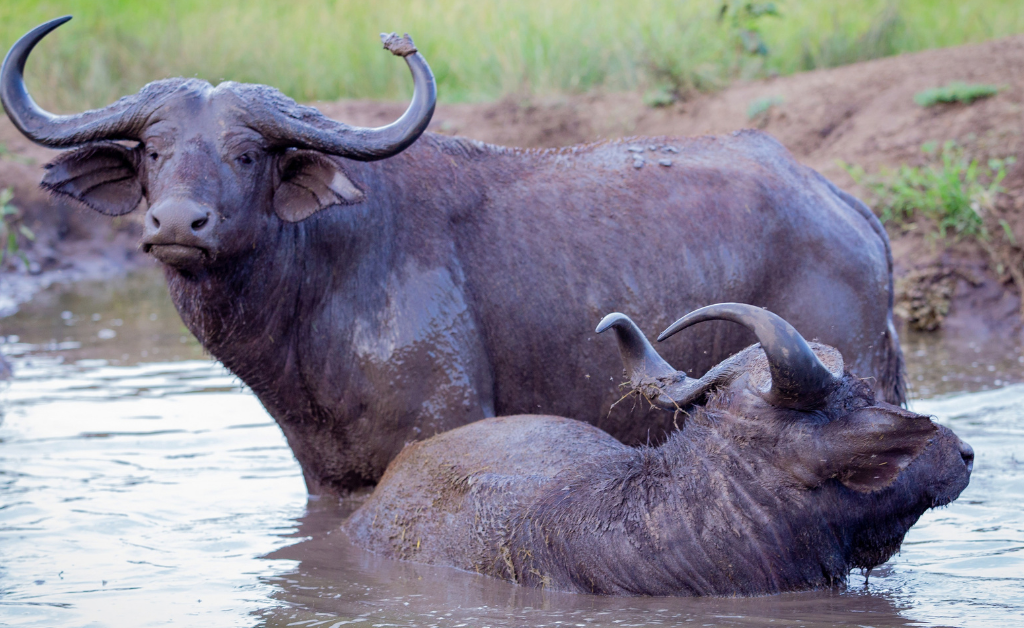
Elephants and Buffaloes
Murchison Falls is an excellent destination for large herds and individual elephants and buffaloes. The Nile also creates an important concentration point for wildlife, particularly around water.
Leopards in Murchison Falls
Leopards are much harder to find than elephants or buffaloes because they are solitary, secretive and often active at night.
Your guide’s knowledge of recent sightings can therefore make a significant difference.
Add a Boat Safari
One of the advantages of choosing Murchison Falls is that your safari does not have to consist entirely of game drives.
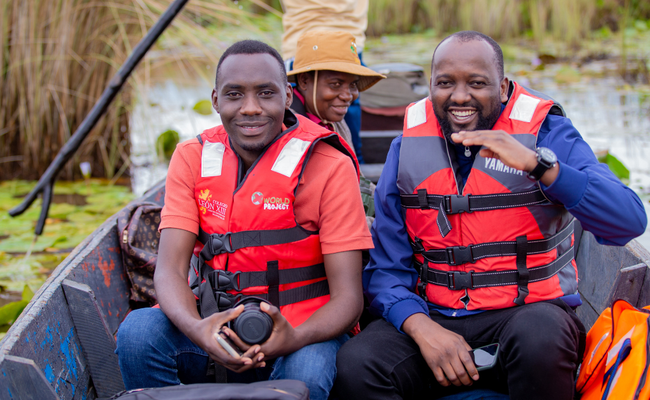
A boat cruise on the Nile toward the base of Murchison Falls offers another perspective on the park, with opportunities to see hippos, crocodiles, elephants, buffaloes and numerous water birds along the riverbanks.
Queen Elizabeth National Park is another major destination for a Uganda Big Five safari.
The park contains savannah, forests, wetlands, lakes and the famous Kazinga Channel. UWA lists elephants, buffaloes, lions and leopards among the park’s wildlife, alongside hippos, Uganda kob and numerous other species.
Tree-Climbing Lions of Ishasha
One of Queen Elizabeth’s most famous wildlife attractions is the population of tree-climbing lions in the Ishasha sector.
These lions are known for resting in large fig trees, creating one of Uganda’s most unusual wildlife-viewing experiences.
However, sightings should never be guaranteed. In 2026, UWA and conservation partners launched a collaborative programme aimed at strengthening conservation and supporting recovery of the Ishasha lion population, so travellers should approach the experience as a wildlife search rather than a guaranteed encounter.
Elephants and Buffaloes
Queen Elizabeth offers excellent opportunities to see elephants and buffaloes, including around the Kazinga Channel.
The channel is also famous for its large concentration of hippos and water-associated wildlife, making a boat cruise an excellent addition to a game-drive itinerary.
Leopards
Leopards occur in Queen Elizabeth National Park but are considerably more difficult to spot than elephants, buffaloes or Uganda kob.
A patient guide and multiple game drives can improve your chances.
If you’re considering combining wildlife with primate experiences, Queen Elizabeth can also fit naturally into a longer itinerary that continues towards Kibale or Bwindi.
3. Kidepo Valley National Park
For travellers looking for a wilder and more remote experience, Kidepo Valley National Park is difficult to ignore.
Located in Uganda’s northeastern Karamoja region, Kidepo is one of the country’s most remote protected areas. Its vast open plains, mountain scenery and relatively low visitor density create a very different atmosphere from the more accessible parks.
The park is particularly known for large numbers of lions, buffaloes and elephants.
Lions in Kidepo
Kidepo is one of Uganda’s important lion-viewing destinations. The open landscape around areas such as the Narus Valley can make wildlife easier to observe, particularly during drier periods when animals concentrate around available water.
Elephants and Buffaloes
Large concentrations of elephants and buffaloes are among Kidepo’s major attractions.
The park’s expansive landscapes also make the experience feel less like travelling between isolated wildlife sightings and more like being immersed in a functioning wilderness ecosystem.
Leopards in Kidepo
Leopards are present but, as elsewhere, are much harder to locate than the more conspicuous large herbivores.
This is one reason why spending several days in the park can be more rewarding than trying to rush through it.
Rhinos Are Returning to Kidepo
Kidepo has an important new development for Big Five travellers.
In March 2026, UWA began reintroducing Southern White Rhinos to Kidepo Valley National Park, 43 years after the last rhino was recorded there. The initial phase involved moving two rhinos from Ziwa Rhino Sanctuary, with eight planned for the initial reintroduction.
This is a major conservation milestone, but travellers should not yet treat Kidepo as a dependable rhino-viewing destination. The animals are being carefully monitored as the population becomes established.
4. Ziwa Rhino Sanctuary
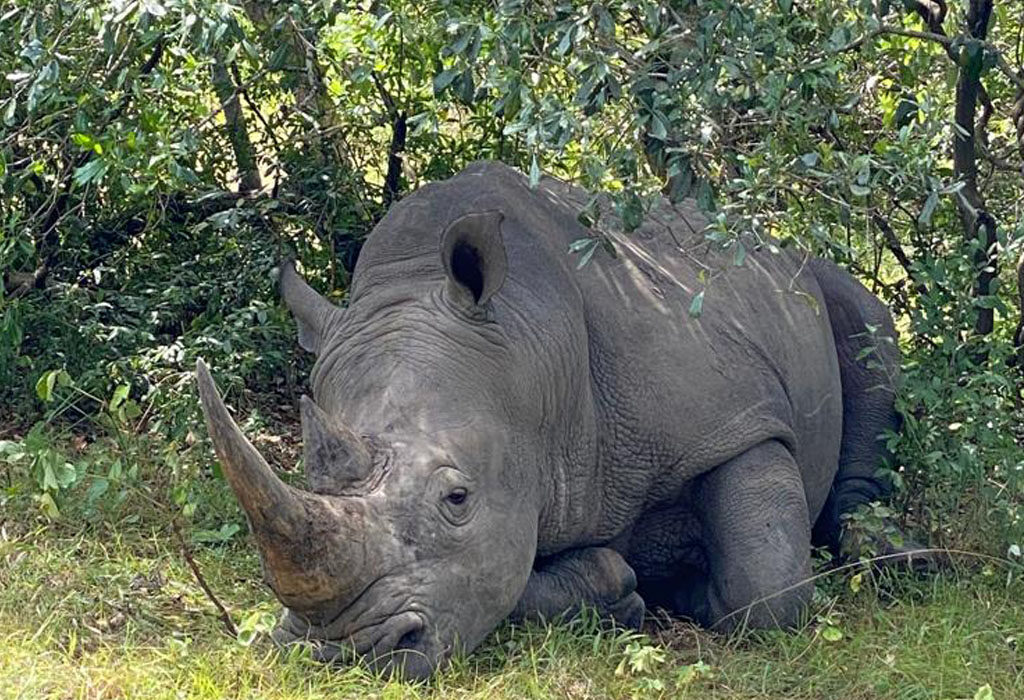
For the most reliable rhino experience on a Uganda safari, Ziwa Rhino Sanctuary remains particularly important.
The sanctuary played a central role in Uganda’s rhino recovery programme after rhinos became extinct in the wild in Uganda. It has subsequently served as the source for rhino reintroduction efforts elsewhere in the country.
In 2026, UWA moved four Southern White Rhinos from Ziwa to Ajai Wildlife Reserve as part of a wider programme to restore rhinos to parts of their former range.
Ziwa is therefore not simply a place to tick “rhino” off a Big Five checklist. It is also an important part of Uganda’s ongoing conservation story.
For travellers travelling by road towards Murchison Falls, Ziwa can be incorporated into an itinerary before continuing north.
5. Lake Mburo National Park
Lake Mburo National Park is smaller than Uganda’s major savannah parks, but it can still add valuable wildlife experiences to an itinerary.
It is particularly known for zebras, impalas, eland, buffaloes, hippos and other wildlife.
Leopards also occur in the area, although sightings are never guaranteed.
Lake Mburo can be especially useful for travellers looking for a shorter safari or for those travelling between Kampala and western Uganda.
Where Can You See Each of the Big Five in Uganda?
Where to See Lions in Uganda
Some of the main destinations for lions include:
Murchison Falls National Park
Queen Elizabeth National Park
Kidepo Valley National Park
Queen Elizabeth’s Ishasha sector is particularly famous for tree-climbing lions, while Kidepo is known for its remote wilderness and lion sightings.
Where to See Leopards in Uganda
Leopards can be found in several Ugandan protected areas, including:
Murchison Falls National Park
Queen Elizabeth National Park
Kidepo Valley National Park
Lake Mburo National Park
However, leopard sightings are much less predictable than sightings of elephants or buffaloes.
Where to See Elephants in Uganda
Elephants occur in several Ugandan national parks, including:
Murchison Falls
Queen Elizabeth
Kidepo Valley
Lake Mburo
UWA has conducted long-term elephant research in Murchison Falls, Queen Elizabeth and Kidepo, highlighting the importance of these landscapes for elephant conservation.
Where to See Buffaloes in Uganda
Buffaloes are widespread in Uganda’s savannah ecosystems and can be encountered in:
Murchison Falls
Queen Elizabeth
Kidepo Valley
Lake Mburo
They are among the Big Five that travellers are generally more likely to encounter during a conventional game drive.
Where to See Rhinos in Uganda
Rhino viewing in Uganda has historically centred on:
Ziwa Rhino Sanctuary
However, Uganda’s rhino conservation programme is expanding.
In 2026, rhinos were moved to both Ajai Wildlife Reserve and Kidepo Valley National Park as part of efforts to restore the species to additional habitats.
That means Uganda’s rhino story is changing, and future safari itineraries may have more options for rhino viewing.
Can You See All Five Big Five in One Uganda Safari?
Yes, it is possible to plan a safari around all five, but it requires careful itinerary planning and realistic expectations.
A practical route could include:
Ziwa Rhino Sanctuary → Murchison Falls National Park → Queen Elizabeth National Park
This gives you a strong opportunity to search for rhinos at Ziwa and then look for lions, leopards, elephants and buffaloes in the national parks.
Travellers with more time could extend the itinerary to Kidepo Valley, particularly if the wider goal is to experience Uganda’s remote northern wilderness rather than simply complete a Big Five checklist.
The important thing is not to treat wildlife sightings as guaranteed. A safari is an experience in a living ecosystem, and animal movements can change from day to day.
How Many Days Do You Need for a Big Five Safari in Uganda?
For a focused Big Five trip, 7–10 days gives you considerably more flexibility than trying to complete everything in just a few days.
A possible itinerary could look like:
Day 1: Arrival in Uganda Day 2: Transfer to Ziwa Rhino Sanctuary Day 3: Rhino tracking and transfer towards Murchison Falls Day 4: Game drive in Murchison Falls Day 5: Game drive and Nile boat cruise Day 6: Travel towards Queen Elizabeth National Park Day 7: Game drive in Queen Elizabeth Day 8: Kazinga Channel boat cruise and another game drive Day 9: Optional Ishasha experience or onward travel Day 10: Return to Kampala or Entebbe
A longer itinerary could add Kidepo Valley, gorilla trekking or chimpanzee trekking.
When Is the Best Time to See the Big Five in Uganda?
Wildlife can be viewed throughout the year, but the dry seasons are often preferred for traditional game viewing because animals tend to gather around remaining water sources and vegetation can be less dense.
That said, Uganda’s climate varies by region, and rainy periods can still offer excellent safari experiences, greener landscapes and fewer visitors.
Rather than choosing a safari date based only on the Big Five, consider the other experiences you want to include.
For example, if you’re combining a savannah safari with gorilla trekking, chimpanzee trekking or birdwatching, your ideal travel period may depend on the entire itinerary.
Uganda Tourism Board also highlights the country’s combination of wildlife, primate, adventure and cultural experiences as part of its tourism offering.
Tips for Seeing the Big Five in Uganda
1. Give Yourself Enough Time
More game drives generally mean more opportunities for wildlife encounters.
A rushed itinerary may cover several parks but leave little time to actually experience them.
2. Listen to Your Guide
Experienced guides communicate with other guides and often have a good understanding of where particular animals have recently been seen.
3. Be Patient
The Big Five do not appear on demand.
Sometimes the most memorable sighting happens after waiting quietly for several minutes.
4. Take Early Morning Game Drives
Early mornings can be productive because temperatures are cooler and many animals are active.
5. Consider Boat Safaris
A boat cruise can add a completely different perspective to your safari, particularly in Murchison Falls and Queen Elizabeth.
6. Don’t Focus Only on the Big Five
Uganda’s wildlife goes far beyond five species.
Giraffes, hippos, Uganda kob, zebras, antelopes, primates and hundreds of bird species can make an equally important contribution to your safari.
7. Choose a Responsible Safari Operator
A good safari operator should prioritise wildlife welfare, follow protected-area regulations and contribute to responsible tourism practices.
UWA’s conservation mandate includes sustainable wildlife management, community participation and conservation education.
Is Uganda Good for a Big Five Safari?
Absolutely—but Uganda’s appeal is broader than simply checking five animals off a list.
A Uganda safari can combine classic savannah wildlife with dramatic landscapes, boat cruises, primate encounters, birdwatching and cultural experiences. The result is a more varied journey than a safari focused exclusively on large mammals.
Murchison Falls offers dramatic scenery and extensive savannah, Queen Elizabeth combines diverse habitats with the famous Kazinga Channel and Ishasha lions, while Kidepo provides a remote wilderness experience that feels very different from Uganda’s more accessible parks.
And with rhino reintroduction efforts now expanding to Kidepo and Ajai, Uganda’s Big Five story is continuing to evolve.
Plan Your Big Five Safari in Uganda with Afriquest Travels
Seeing the Big Five in Uganda is about more than visiting several national parks. The best itinerary depends on how much time you have, which animals you most want to see, whether you want to include gorilla or chimpanzee trekking, your preferred accommodation level and whether you want to travel by road or combine road travel with domestic flights.
At Afriquest Travels, we create tailor-made Uganda safaris around your interests, schedule and budget.
Whether you want a classic Big Five safari, a combined wildlife and gorilla trekking adventure, a family safari or a longer East African journey, we can help you design an itinerary around the experiences that matter most to you.
Planning an African safari in September 2026? Uganda deserves a place at the top of your list. From its diverse landscapes and abundant wildlife to world-class primate experiences, spectacular national parks and authentic cultural encounters, Uganda offers a remarkable safari experience for travelers seeking something beyond the traditional African safari. Whether you are exploring the […]
If you’re planning a wildlife safari in Uganda, one of the first questions you’re likely to ask is: When is the best time to go? The good news is that Uganda is a year-round safari destination. You can see wildlife, explore national parks and enjoy unforgettable experiences in every season. If you’re still deciding which […]
From tracking mountain gorillas in misty rainforests to watching elephants roam the savannah, Uganda offers wildlife experiences far beyond the traditional safari.
Gorilla trekking in Uganda is an experience unlike any other a thrilling journey into the heart of Africa’s ancient rainforests and one of the world’s most remarkable wildlife encounters. Deep within the misty forests of Bwindi Impenetrable National Park and Mgahinga Gorilla National Park, travellers hike through lush vegetation, steep slopes and sometimes muddy trails […]
Planning a safari in Uganda often starts with one important question: how much does a Uganda safari cost? The answer depends on much more than the number of days you spend in the country. Your safari budget can change significantly depending on whether you choose budget, mid-range or luxury accommodation, how many people are travelling […]
If you are dreaming of seeing mountain gorillas in the wild, Uganda gives you two remarkable options: Bwindi Impenetrable National Park and Mgahinga Gorilla National Park. Both are located in southwestern Uganda and protect populations of the endangered mountain gorilla. Both offer the chance to trek through beautiful montane forests and spend time observing gorillas […]
If you are planning a Uganda safari, one of the first questions you will probably ask is: how many days do you need for a Uganda safari? The short answer is that 5 to 7 days is a good starting point for a classic Uganda safari, while 10 to 14 days is ideal if you […]
If seeing mountain gorillas in their natural habitat is on your bucket list, Uganda and Rwanda are two of the best places in the world to make that dream a reality. Both countries are home to endangered mountain gorillas. Both offer guided trekking experiences through beautiful montane forests. And in both destinations, visitors can spend […]