The Best Wildlife Experiences to Have in Uganda Right Now
Uganda is one of those rare African destinations where a wildlife holiday can be much more than a traditional safari.
Yes, you can drive across open savannah looking for elephants, lions, giraffes and buffaloes. But you can also trek through ancient forests in search of chimpanzees, spend time with mountain gorillas, cruise along the Nile watching hippos and crocodiles, track rhinos on foot, search for the elusive shoebill, or walk through the wilderness rather than experiencing it from a safari vehicle.
And that variety is exactly what makes Uganda one of East Africa’s most fascinating wildlife destinations right now.
Uganda Wildlife Authority manages 10 national parks, 12 wildlife reserves and numerous wildlife sanctuaries and community wildlife areas. The country’s protected areas range from tropical rainforests and volcanic mountains to vast savannah plains and wetlands.
Even more encouragingly, the 2026 State of Wildlife Resources in Uganda Report highlights recovery among several important wildlife populations, including southern white rhinos, buffaloes, hippos, zebras and Uganda kob. At the same time, the report makes it clear that conservation work remains essential, with some species still facing pressure.
So, if you’re planning a safari in Uganda, what are the wildlife experiences actually worth putting on your itinerary?
Here are some of the best.
1. Go Gorilla Trekking in Bwindi Impenetrable National Park
For many visitors, gorilla trekking is the ultimate Uganda wildlife experience.
Deep in the ancient montane forests of southwestern Uganda, you can hike through the forest in search of a habituated mountain gorilla family.
The experience isn’t a conventional safari. There is no vehicle and no open savannah. Instead, you follow experienced trackers and guides through dense forest, steep terrain and changing conditions until you find the gorillas.
Once you locate the family, you can spend up to one hour observing them.
According to the Uganda Wildlife Authority’s official gorilla tracking information, gorilla treks can take approximately 2–7 hours, depending on where the gorillas are located and the conditions on the day. Gorilla trekking in Uganda takes place in Bwindi Impenetrable National Park and Mgahinga Gorilla National Park.
Why it’s so special
You’re not simply seeing an animal in a park.
You’re entering its habitat.
The forest, the sounds, the anticipation of finding the gorillas and the encounter itself combine to create an experience that is difficult to compare with a conventional game drive.
For travellers looking for a truly unforgettable wildlife encounter, gorilla trekking belongs at the top of the list.
2. Track Chimpanzees in Kibale Forest
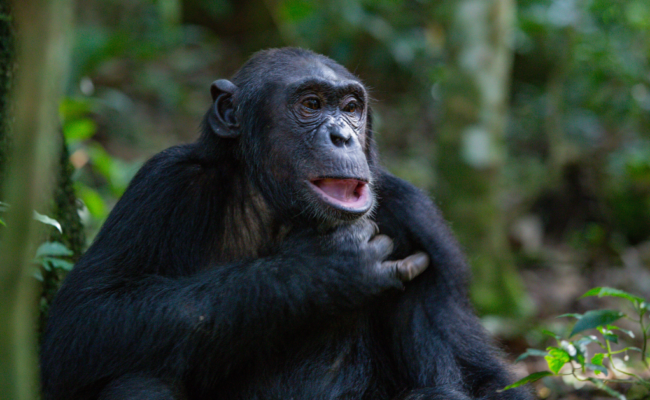
If gorillas are Uganda’s most famous great ape experience, chimpanzee trekking is another must-do.
Kibale Forest National Park is one of Uganda’s best-known destinations for chimpanzee tracking and is home to one of the country’s most important populations of wild chimpanzees.
Unlike a game drive where you may cover large distances looking for wildlife, chimpanzee tracking takes you into the forest.
You follow signs of chimpanzee activity and listen for calls echoing through the trees before eventually coming across the troop.
According to UWA, chimpanzee tracking and habituation experiences take place throughout the year. Visitors participating in habituation can spend much longer with the chimpanzees as researchers and habituators work with the animals.
Why choose chimpanzee trekking?
Kibale isn’t only about chimpanzees.
The forest supports a remarkable diversity of primates, making a visit particularly rewarding for wildlife lovers who are fascinated by animal behaviour and rainforest ecosystems.
For an itinerary that combines gorillas and chimpanzees, Uganda is difficult to beat.
3. Take a Game Drive Through Murchison Falls National Park
Sometimes, you simply want the classic African safari experience.
That means getting into a safari vehicle early in the morning, heading into the savannah and watching the landscape come alive.
Murchison Falls National Park is one of Uganda’s best places for this.
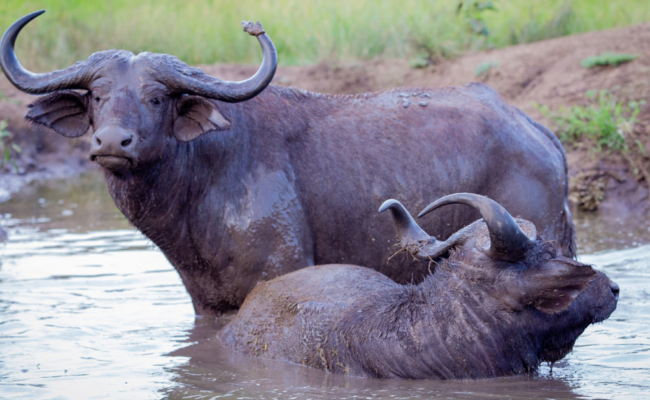
Uganda’s largest national park protects extensive savannah landscapes and supports species including elephants, lions, buffaloes, giraffes, Uganda kob and many other animals.
Game drives give you the opportunity to explore different habitats while your guide searches for wildlife.
Make it more than just a game drive
One of the best things about Murchison Falls is that you can combine your game drive with other experiences.
For example:
Game drive → Nile boat cruise → Murchison Falls
This gives you three completely different perspectives on the park.
You experience the savannah from a vehicle, observe wildlife from the water and then witness the power of the Nile as it squeezes through the narrow gorge at Murchison Falls.
The result is a much richer safari than simply driving around looking for animals.
4. Cruise the Kazinga Channel in Queen Elizabeth National Park
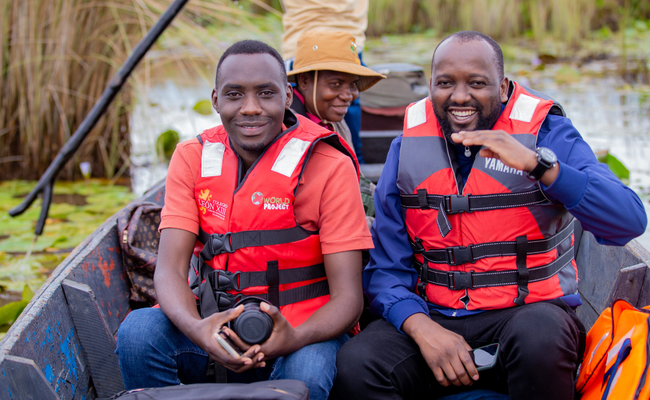
A boat safari is one of the easiest ways to add a completely different dimension to your Uganda adventure.
In Queen Elizabeth National Park, the Kazinga Channel connects Lake Edward and Lake George and is famous for its concentration of wildlife.
From the water, you may see:
Hippos
Elephants
Buffaloes
Crocodiles
Antelopes
Waterbirds
Other wildlife along the shoreline
The experience is particularly enjoyable because you aren’t moving through the landscape looking for wildlife.
Instead, wildlife comes to the water.
A boat cruise can therefore be an excellent complement to game drives in Queen Elizabeth National Park.
UWA describes Queen Elizabeth as a destination with diverse wildlife and landscapes, while its current visitor information also highlights boat cruises, game drives and nature-based experiences.
5. Search for Tree-Climbing Lions in Ishasha
There are many places in Africa where you can see lions.
But seeing lions resting high in the branches of a fig or acacia tree is a very different experience.
The Ishasha sector of Queen Elizabeth National Park is famous for its tree-climbing lions.
Spotting them isn’t guaranteed—they are wild animals, after all—but when you find them stretched across the branches above the savannah, it is an unforgettable sight.
This is one of the reasons Queen Elizabeth National Park works particularly well for travellers who want variety.
If you’ve always wanted to see rhinos, Uganda offers an experience that is quite different from a conventional game drive.
At Ziwa Rhino Sanctuary, visitors can take part in rhino tracking on foot.
Instead of sitting inside a vehicle and observing rhinos from a distance, you walk through the sanctuary with guides while learning about the animals and the conservation work protecting them.
UWA identifies Ziwa as Uganda’s home for rhinos in the wild and highlights experiences including rhino trekking, shoebill tours, canoe rides, birdwatching, night walks and nature walks.
Why include Ziwa in your itinerary?
It can work particularly well as an addition to a northern Uganda safari.
For example:
Kampala → Ziwa Rhino Sanctuary → Murchison Falls National Park
This creates a natural progression from rhino tracking into a classic savannah safari.
And because the experience is on foot, it adds another dimension to your wildlife adventure.
7. Search for the Shoebill
For serious bird lovers, Uganda offers something particularly special: the chance to search for the shoebill.
This enormous, prehistoric-looking bird is one of Africa’s most sought-after bird species.
It isn’t necessarily an easy bird to find, which is part of what makes the search so exciting.
Depending on your itinerary, shoebill experiences can be incorporated into wetland and wildlife excursions, including areas where specialist birding guides operate.
UWA lists Murchison Falls among Uganda’s excellent birding destinations and specifically highlights the shoebill as one of the sought-after species found there.
Why birding belongs on a wildlife safari
You don’t have to be a professional birder to enjoy it.
Once you start paying attention to Uganda’s birdlife, you quickly realise that the safari isn’t only about the large mammals.
From colourful kingfishers and bee-eaters to eagles, herons and the extraordinary shoebill, Uganda’s skies, forests and wetlands are full of life.
8. Track Golden Monkeys in Mgahinga
If you are already travelling to southwestern Uganda for gorilla trekking, consider adding golden monkey tracking to your itinerary.
Golden monkeys are an endangered primate found in the Virunga Mountains, and Mgahinga Gorilla National Park offers opportunities to track habituated troops.
The experience takes you into the bamboo and montane forest environment of the Virungas.
According to UWA, both habituated troops for tracking and semi-habituated troops for experiential tourism are available in Mgahinga. The experiential option can give visitors greater insight into research, conservation and the ecology of these unusual primates.
A great combination
One of the most interesting ways to experience southwestern Uganda is:
Gorilla trekking + golden monkey tracking + volcano hiking
That gives you three very different experiences within the same spectacular mountain landscape.
9. Explore Kidepo Valley National Park
If you want to get away from the more established safari routes, Kidepo Valley National Park should be on your radar.
Located in northeastern Uganda, Kidepo offers vast landscapes, dramatic mountains and a strong sense of wilderness.
It feels different from Uganda’s southwestern parks.
There are fewer visitors, enormous open landscapes and a distinctive collection of wildlife and cultural experiences.
UWA describes Kidepo as classic African wilderness and highlights its remote character, wildlife and connection between conservation and culture.
Why Kidepo is worth the journey
Kidepo is particularly appealing if you want:
Remote wilderness
Beautiful savannah scenery
Game drives away from busy tourist routes
Wildlife photography
Birdwatching
Cultural experiences
A slower, more immersive safari
It may require more travel time to reach, but that remoteness is part of the attraction.
10. Try a Walking Safari in Lake Mburo National Park
A safari doesn’t always have to happen from a vehicle.
In Lake Mburo National Park, you can experience the landscape on foot with a guided nature or walking safari.
Suddenly, the small things become much more noticeable.
Instead of simply driving past a herd of antelope, you’re paying attention to tracks, insects, plants, birds and sounds around you.
Lake Mburo is particularly well suited to travellers who want a shorter safari or who enjoy active experiences.
UWA highlights the park for walking safaris and tranquil wildlife encounters, and recent UWA tourism activities have also showcased nature walks among the experiences available there.
Add cycling for something different
Lake Mburo is also one of Uganda’s more unusual safari destinations because cycling can be incorporated into the wildlife experience.
That makes it a great option for travellers who want to experience Uganda’s wilderness in a more active way rather than spending every safari day inside a vehicle.
11. Go Lion Tracking in Queen Elizabeth National Park
If you’re particularly interested in predators, don’t stop at a regular game drive.
Lion tracking offers a more focused wildlife experience.
Rather than simply hoping to encounter lions while driving through the park, specialised tracking activities can provide greater insight into predator behaviour, identification and conservation.
UWA’s current tourism information lists lion tracking among the experiences available in Queen Elizabeth National Park.
For wildlife enthusiasts who want to understand more about what they’re seeing—not just photograph it—experiences like this can make a safari much more meaningful.
12. Go Birdwatching in Semuliki National Park
Uganda is an extraordinary birding destination, and Semuliki National Park is particularly interesting for serious birdwatchers.
The park’s location and ecological characteristics give it strong connections to Central African ecosystems.
UWA notes that Semuliki is the only place in East Africa where many Guinea-Congo regional bird species can be found.
That makes it especially valuable for birders looking for species they may not encounter elsewhere in East Africa.
Even if you’re not a specialist birder, a guided forest walk can introduce you to a completely different side of Uganda’s wildlife.
13. Combine Wildlife with a Cultural Experience
Wildlife doesn’t exist in isolation.
Across Uganda, communities live around protected areas and have long-standing relationships with the landscapes and wildlife around them.
Adding a cultural experience to your safari can therefore help you understand the people, traditions and history connected to the places you’re visiting.
Depending on your route, this could include:
Community visits
Traditional performances
Local crafts
Food experiences
Cultural storytelling
Indigenous forest knowledge
Community-led conservation experiences
UWA and the Uganda Tourism Board both highlight cultural experiences as an important part of Uganda’s tourism offering.
This is particularly worthwhile if you want your safari to feel like more than a checklist of animals.
14. Experience Uganda’s Wildlife at Night
If you’ve already done several daytime game drives, consider experiencing the wilderness after dark.
Night drives can reveal a completely different side of the ecosystem.
Many animals are more active after sunset, and the sounds and atmosphere of the savannah change dramatically.
Depending on the destination and current regulations, night game drives can be available in some protected areas.
For example, UWA’s current tariff information lists night game drives in destinations including Murchison Falls, Kidepo Valley and Queen Elizabeth National Park.
A night drive can therefore be a fascinating addition to a traditional daytime safari.
15. Go Beyond the Big Five
One of the biggest mistakes first-time safari travellers can make is thinking that wildlife viewing is only about ticking off the Big Five.
Uganda has so much more to offer.
Depending on where you travel, you could encounter:
Mountain gorillas
Chimpanzees
Golden monkeys
Giraffes
Elephants
Lions
Buffaloes
Hippos
Zebras
Uganda kob
Elands
Antelopes
Rhinos
Shoebills
Hundreds of bird species
Uganda’s 2026 State of Wildlife Resources Report records more than 18,000 species of flora and fauna, including more than 1,000 bird species, alongside significant populations of gorillas, chimpanzees, elephants, giraffes and other wildlife.
The real strength of a Ugandan safari is therefore not simply the number of famous animals you can see.
It’s the variety of ecosystems and experiences.
Which Wildlife Experience Should You Choose?
That depends on what kind of traveller you are.
If you want…
Consider…
An unforgettable primate encounter
Gorilla trekking
Chimpanzee encounters
Kibale chimpanzee trekking
Classic African safari
Murchison Falls game drive
Wildlife from the water
Kazinga Channel boat cruise
Tree-climbing lions
Ishasha
Rhinos
Ziwa Rhino Sanctuary
Rare birds
Shoebill or Semuliki birding
Golden monkeys
Mgahinga
Remote wilderness
Kidepo Valley
Walking wildlife experience
Lake Mburo
Predator-focused experience
Lion tracking
A broader cultural journey
Wildlife + community experiences
Nocturnal wildlife
Night game drive
The Best Way to Experience Uganda’s Wildlife
The secret to a great Uganda safari isn’t necessarily visiting the largest number of national parks.
It’s combining different types of experiences.
Imagine starting your journey in Kibale Forest, listening for chimpanzees high in the trees.
Then travelling to Queen Elizabeth National Park for a game drive and a boat cruise along the Kazinga Channel.
From there, continue south to Bwindi for a gorilla trek.
Ziwa Rhino Sanctuary + Murchison Falls + Nile boat cruise + Shoebill search
Or a more adventurous trip:
Mgahinga + Golden Monkeys + Gorilla Trekking + Volcano Hiking
There isn’t one correct way to experience Uganda.
And that’s precisely the point.
Why Uganda’s Wildlife Experience Is Worth Considering Right Now
There is another reason to put Uganda on your safari list now: its conservation story is evolving.
The 2026 State of Wildlife Resources Report highlights recovery among several important wildlife populations, including southern white rhinos, buffaloes, hippos, zebras and Uganda kob. At the same time, the report makes it clear that conservation work remains essential, with some species still facing pressure.
In March 2026, UWA also began the historic reintroduction of southern white rhinos into Kidepo Valley National Park, marking their return to the landscape 43 years after the last rhino was sighted there. The initial phase involved transferring eight rhinos from Ziwa Rhino Sanctuary to Kidepo.
That makes travelling responsibly particularly meaningful.
When you choose properly managed wildlife experiences, your visit contributes to an ecosystem where conservation, tourism and surrounding communities are interconnected.
How Many Days Do You Need for a Uganda Wildlife Safari?
There is no single answer because it depends on the experiences you want.
4–5 Days
Ideal for a focused trip such as:
Kampala → Murchison Falls → Game Drives → Nile Boat Cruise → Kampala
or
Kampala → Lake Mburo → Wildlife Experiences → Kampala
7 Days
Seven days gives you enough time to combine several major experiences.
For example:
Kibale → Queen Elizabeth → Bwindi
This can combine chimpanzee trekking, game drives, a boat cruise and gorilla trekking.
10–14 Days
With more time, you can slow down and experience several different ecosystems.
A longer itinerary could include:
Murchison Falls → Kibale → Queen Elizabeth → Bwindi
Or you could venture further north to include Kidepo Valley.
The ideal itinerary depends on your priorities, budget, travel dates and how much time you want to spend travelling between destinations.
Responsible Wildlife Tourism in Uganda
The best wildlife experience is one that leaves the animals and their habitats protected for future generations.
As a traveller, you can contribute by:
Following park rules and ranger instructions
Keeping a respectful distance from wildlife
Never feeding wild animals
Avoiding litter
Supporting legitimate conservation initiatives
Using licensed guides and safari operators
Respecting local communities and cultural practices
Choosing experiences that benefit conservation and communities
Wildlife tourism works best when the animals remain wild and the places they inhabit remain protected.
Plan Your Uganda Wildlife Adventure with Afriquest Travels
With so many wildlife experiences available, planning a Uganda safari can sometimes feel overwhelming.
Where should you go? How many days do you need? Should you choose gorillas or chimpanzees? Is Kidepo worth the extra journey? Should you add a boat cruise? Which parks work best together?
That’s where local knowledge makes a difference.
At Afriquest Travels, we create tailor-made safari experiences across Uganda and East Africa based on what you actually want to experience.
Your itinerary could be built around:
Gorilla trekking
Chimpanzee trekking
Classic game drives
Boat safaris
Lion tracking
Rhino tracking
Golden monkey tracking
Birdwatching
Walking safaris
Cultural experiences
Scenic landscapes
Or a combination of several experiences
And if you’re travelling beyond Uganda, we can also help you combine your journey with Kenya, Rwanda or Tanzania.
The goal isn’t simply to take you from one national park to another.
It’s to create a journey that gives you the kind of wildlife experience you’ll still be talking about years later.
Ready to Experience Uganda’s Wildlife?
Whether your dream is to stand in a rainforest watching mountain gorillas, cruise past hippos on the Kazinga Channel, search for a shoebill in a wetland or watch elephants crossing the savannah at sunset, Uganda has an experience waiting for you.
Contact Afriquest Travels today and let us design a tailor-made Uganda safari around the wildlife, landscapes and experiences you want most.
If you are dreaming of seeing mountain gorillas in the wild, Uganda gives you two remarkable options: Bwindi Impenetrable National Park and Mgahinga Gorilla National Park. Both are located in southwestern Uganda and protect populations of the endangered mountain gorilla. Both offer the chance to trek through beautiful montane forests and spend time observing gorillas […]
If seeing mountain gorillas in their natural habitat is on your bucket list, Uganda and Rwanda are two of the best places in the world to make that dream a reality. Both countries are home to endangered mountain gorillas. Both offer guided trekking experiences through beautiful montane forests. And in both destinations, visitors can spend […]
If you’re planning a wildlife safari in Uganda, one of the first questions you’re likely to ask is: When is the best time to go? The good news is that Uganda is a year-round safari destination. You can see wildlife, explore national parks and enjoy unforgettable experiences in every season. If you’re still deciding which […]
If you are planning a Uganda safari, one of the first questions you will probably ask is: how many days do you need for a Uganda safari? The short answer is that 5 to 7 days is a good starting point for a classic Uganda safari, while 10 to 14 days is ideal if you […]
Planning a safari in Uganda often starts with one important question: how much does a Uganda safari cost? The answer depends on much more than the number of days you spend in the country. Your safari budget can change significantly depending on whether you choose budget, mid-range or luxury accommodation, how many people are travelling […]
Planning an African safari in September 2026? Uganda deserves a place at the top of your list. From its diverse landscapes and abundant wildlife to world-class primate experiences, spectacular national parks and authentic cultural encounters, Uganda offers a remarkable safari experience for travelers seeking something beyond the traditional African safari. Whether you are exploring the […]
If you’re wondering where to see the Big Five in Uganda, you’re in for an exciting safari experience. Uganda may be better known internationally for gorilla trekking, but its savannah parks are also home to lions, leopards, elephants, buffaloes and rhinos. From the wide plains of Murchison Falls to the remote wilderness of Kidepo Valley, […]
Gorilla trekking in Uganda is an experience unlike any other a thrilling journey into the heart of Africa’s ancient rainforests and one of the world’s most remarkable wildlife encounters. Deep within the misty forests of Bwindi Impenetrable National Park and Mgahinga Gorilla National Park, travellers hike through lush vegetation, steep slopes and sometimes muddy trails […]