If you’re planning a wildlife safari in Uganda, one of the first questions you’re likely to ask is: When is the best time to go? The good news is that Uganda is a year-round safari destination. You can see wildlife, explore national parks and enjoy unforgettable experiences in every season. If you’re still deciding which experiences to include in your itinerary, explore our guide to the best wildlife experiences to have in Uganda. The best time to see wildlife in Uganda depends on what you want to experience.
If your priority is traditional savannah game viewing, the dry seasons are generally the most favorable because animals are more likely to gather around water sources and vegetation is often easier to navigate. If you’re interested in chimpanzee trekking, birdwatching, lush scenery or fewer tourists, the wetter months can offer their own advantages.
Uganda’s climate varies considerably across the country, so there isn’t one single month that is “best” for every safari experience.
In this guide, we’ll break down the best time to see wildlife in Uganda, what you can expect in each season, and which destinations and experiences work particularly well throughout the year.
When Is the Best Time to See Wildlife in Uganda?
For traditional wildlife safaris, the dry seasons are generally the best time to see wildlife in Uganda.
The main dry periods are broadly:
June to August/September
December to February
During these periods, rainfall is generally lower in many savannah areas, roads and safari tracks are often easier to navigate, and animals may concentrate around remaining water sources.
Uganda Wildlife Authority notes that the best time for primate tracking and wildlife viewing in the savannah reserves is generally during the dry seasons of June to August and December to February.
However, this doesn’t mean that the wet seasons are bad for wildlife viewing.
Far from it.
The rainy months bring lush green landscapes, abundant food, excellent birding and fewer visitors, while some forest experiences can actually benefit from wetter conditions.
The right season therefore depends on the kind of safari you want.
Best Time to See Wildlife in Uganda – Wildlife Seasons at a Glance
Season
Months
Wildlife Viewing
Main Advantages
Long dry season
June–August/September
⭐⭐⭐⭐⭐
Excellent game viewing and easier travel
Short dry season
December–February
⭐⭐⭐⭐⭐
Good wildlife viewing and generally favorable conditions
Long rains
March–May
⭐⭐⭐⭐
Lush scenery, fewer tourists, excellent birding
Short rains
September–November
⭐⭐⭐⭐
Green landscapes, fewer crowds, good wildlife experiences
These are broad patterns rather than strict rules. Uganda is close to the equator, and rainfall can vary significantly between regions and even from one year to another. The Uganda Tourism Board also emphasizes that Uganda can be visited throughout the year, with the best period depending on the traveller’s interests.
If your main goal is seeing as much savannah wildlife as possible, the dry season is the best time to see wildlife in Uganda.
Rainfall tends to be lower, vegetation can be less dense and animals may gather around reliable water sources.
The Dry Season: June to August/September
This can make it easier to spot wildlife during game drives.
What can you see?
Depending on the park, you may encounter:
Elephants
Lions
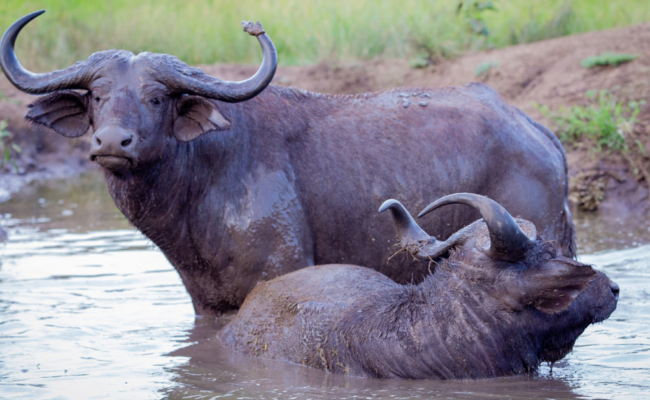
Buffaloes
Giraffes
Zebras
Uganda kob
Antelopes
Hippos
Leopards
Numerous bird species
The dry season is particularly attractive for first-time safari travellers who want the classic African wildlife experience.
Best National Parks During the Dry Season
Murchison Falls National Park
Murchison Falls is one of Uganda’s strongest choices for dry-season wildlife viewing.
This makes the period particularly good for game drives.
You can also combine your wildlife viewing with a boat cruise along the Nile, where hippos, crocodiles, elephants and waterbirds can often be seen.
Queen Elizabeth National Park
Queen Elizabeth is another excellent dry-season destination.
The park’s combination of savannah, woodland, wetlands and waterways supports a wide variety of wildlife.
A typical itinerary can combine:
Game drive + Kazinga Channel boat cruise + chimpanzee trekking
This makes Queen Elizabeth particularly appealing to travellers who want variety rather than focusing exclusively on big game.
Kidepo Valley National Park
For a more remote safari experience, consider Kidepo Valley.
During the dry season, the Narus Valley becomes particularly important because its remaining water sources attract wildlife.
UWA describes Kidepo as Uganda’s most remote and least explored national park and highlights its extensive wildlife and dramatic wilderness landscapes.
If your dream safari involves wide-open landscapes, relatively few visitors and a strong sense of wilderness, Kidepo is an excellent option.
Lake Mburo National Park
Lake Mburo can also be rewarding during the drier months.
The park is particularly known for wildlife such as zebras and impalas, and it offers experiences that differ from the larger savannah parks, including walking safaris and boat trips.
Its proximity to Kampala also makes it a practical choice for shorter safari itineraries.
The Short Dry Season: December to February
The period from December to February is another excellent or best time to see wildlife in Uganda.
The weather is generally drier across many safari areas, making roads and game tracks more manageable.
For travellers who want a traditional safari with game drives and boat cruises, these months can offer excellent conditions.
Best Time to See Wildlife in Uganda – Why choose December to February?
You can enjoy:
Good game viewing
Relatively dry safari tracks
Warm weather
Game drives
Boat safaris
Primate trekking
Birdwatching
Beautiful landscapes
However, December can be busier around the Christmas and New Year holiday period, so travellers planning a safari around the holidays should consider booking accommodation and key activities well in advance.
The Wet Season: March to May
Many travellers automatically avoid the rainy season.
But if you don’t mind occasional rain, March to May can be an excellent time to experience Uganda’s wildlife from a different perspective.
The landscapes become intensely green, vegetation flourishes and the countryside can be particularly beautiful.
There are also generally fewer tourists compared with the peak dry-season periods.
What are the advantages?
The wet season can offer:
Lush green landscapes
Fewer visitors
Excellent birdwatching
Beautiful photography conditions
Lower-season travel opportunities
Excellent forest experiences
Rain can make some roads and trails more challenging, so flexibility is important.
But a rainy morning doesn’t necessarily mean a rainy day.
Uganda’s weather can change quickly, and periods of rain are often followed by sunshine.
The Short Rains: September to November
September to November brings another period of increased rainfall in many parts of Uganda.
But once again, this doesn’t mean you should rule out a safari.
The landscape becomes vibrant and green, and tourist numbers can be lower than during the peak dry season.
This can be particularly appealing if you prefer a quieter safari experience.
The exact conditions vary considerably by region. For example, Murchison Falls has a different rainfall pattern from southwestern Uganda, while Kidepo’s semi-arid environment also behaves differently from the wetter forest ecosystems.
That regional diversity is important when deciding when to travel.
What Is the Best Time for a Big Game Safari in Uganda?
If your main priority is elephants, lions, buffaloes, giraffes, zebras and other savannah wildlife, the drier periods are the best time to see wildlife in Uganda
Best Time to See Wildlife in Uganda – Best choices for seeing the big five:
June to August/September
or
December to February
During these periods, reduced rainfall can make game drives more comfortable and wildlife easier to locate in many savannah environments.
Murchison Falls, Queen Elizabeth, Kidepo Valley and Lake Mburo are among the destinations to consider.
What Is the Best Time for Gorilla Trekking?
Gorilla trekking is available throughout the year.
However, the drier months can be more comfortable for trekking, particularly because trails may be less muddy and slippery.
The main dry periods are generally June to August/September and December to February, although conditions in the mountain forests can change quickly.
Importantly, Bwindi and Mgahinga are rainforest environments.
That means rain is always possible, even during a generally dry season.
So don’t travel to Uganda for gorilla trekking without bringing appropriate rain protection.
You might assume that the dry season is automatically best for every wildlife experience.
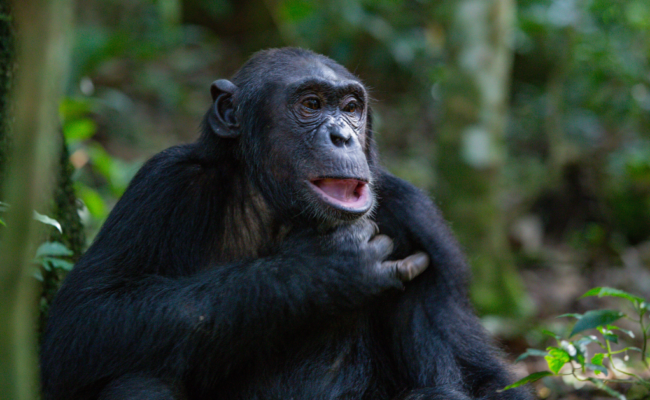
But UWA specifically notes that the rainy season can be the best time for chimpanzee tracking, despite the muddy conditions.
During the dry season, chimpanzees may move deeper into the forest in search of food, while wetter conditions can sometimes make them easier to locate. Chimpanzee tracking and habituation experiences take place throughout the year.
So if chimpanzees are your primary reason for visiting Uganda, don’t automatically eliminate the rainy months.
Best Time to See Wildlife in Uganda: Birdwatching
Uganda is an exceptional birding destination throughout the year, particularly because of its large number of resident species.
However, UWA identifies late May through September as a particularly favorable period for birdwatching, when there is generally less rain and food is abundant.
For birders, Uganda’s wet seasons can also be rewarding because the landscape is productive and bird activity can be excellent.
Some of the country’s top birding destinations include:
Murchison Falls
Bwindi
Mgahinga
Queen Elizabeth
Kibale
Semuliki
Lake Mburo
If the shoebill is on your bucket list, Uganda’s wetlands are particularly worth considering. The Uganda Wildlife Authority’s Ramsar wetlands information highlights important wetland habitats such as the Albert Delta in Murchison Falls and the Mburo-Nakivali system, both of which support significant birdlife including the shoebill.
What Is the Best Time to Visit Kidepo Valley?
Kidepo deserves special consideration because its climate differs from many other Ugandan destinations.
The park lies in a semi-arid region and can become extremely dry.
During the dry period, wildlife tends to concentrate around available water sources, particularly in the Narus Valley, making it a particularly attractive period for game viewing.
then the dry season is a strong choice for Kidepo.
What Is the Best Time to Visit Lake Mburo?
Lake Mburo is one of the more flexible safari destinations in Uganda.
UWA’s park information states that the park can be visited at any time of year, while its climate includes a longer dry period and shorter dry period separated by rainy seasons.
Because Lake Mburo is relatively close to Kampala and offers game drives, boat trips, walking safaris and other activities, it can work well for travellers with limited time.
Best Time to See Specific Wildlife in Uganda
There is no guarantee that you’ll see a particular animal on a particular day. Wildlife is wild, and sightings depend on many factors.
However, some broad seasonal patterns can help with planning.
Wildlife / Experience
Generally Favorable Period
Elephants
Dry season
Lions
Dry season
Buffaloes
Dry season
Giraffes
Dry season
Zebras
Dry season
Uganda kob
Dry season
Hippos
Year-round; water sources especially important in dry periods
Mountain gorillas
Year-round; drier months often more comfortable
Chimpanzees
Year-round; rainy season can be particularly favorable
Golden monkeys
Year-round
Shoebill
Year-round; birding conditions vary by location
General birdwatching
Especially late May–September
Walking safaris
Drier months generally more comfortable
Boat safaris
Year-round, subject to local conditions
Think of this table as a planning guide, not a wildlife guarantee.
Is the Dry Season Always Better?
Not necessarily.
This is one of the biggest misconceptions about African safaris.
The dry season may offer the easiest conditions for traditional game viewing, but the wet season has its own attractions.
Dry season advantages
Easier game viewing in many savannah areas
Animals may concentrate around water
Generally easier road conditions
Comfortable conditions for many outdoor activities
Excellent for first-time safari travellers
Wet season advantages
Lush green landscapes
Fewer tourists
Excellent birding
Dramatic skies and scenery
Excellent photography opportunities
Potentially more attractive travel rates
Some primate experiences can be particularly rewarding
So instead of asking:
“What is the best month to visit Uganda?”
a better question is:
“What do I want to experience in Uganda?”
Best Time to See Wildlife in Uganda Based on Your Travel Goals
If you want a classic wildlife safari
Choose: June–August or December–February.
Focus on Murchison Falls, Queen Elizabeth, Kidepo Valley or Lake Mburo.
If you want gorilla trekking
Choose: The drier months for generally more comfortable trekking conditions, while remembering that rain can occur at any time in the rainforest.
Focus on Bwindi or Mgahinga.
If you want chimpanzee trekking
Choose: Any time of year, with the rainy season potentially offering particularly favorable tracking conditions according to UWA.
Focus on Kibale Forest.
If you want birdwatching
Choose: Late May–September is particularly favorable, although Uganda’s resident birds make year-round birding worthwhile.
If you want fewer tourists
Choose: The wetter or shoulder periods.
You’ll generally encounter fewer visitors than during the peak dry-season months.
If you want lush scenery
Choose: The rainy seasons.
The landscapes can be spectacularly green.
If you want to combine several experiences
Choose: Your travel dates based on the experience that matters most to you, then build the rest of the itinerary around it.
Month-by-Month Wildlife Guide to Uganda
Here’s a simple overview to help you plan.
January
Generally dry
A good month for traditional wildlife safaris, game drives and many outdoor activities.
February
Generally dry
Often favorable for game viewing and safari travel, although temperatures can be warm in some areas.
March
Rainfall increases
The landscapes become greener and birding can be rewarding.
April
Wet season
Expect wetter conditions, particularly in many southern and western areas. Forest trails can become muddy, but the scenery is beautiful.
May
Wet season
A good period for lush landscapes, birdwatching and travellers who prefer quieter destinations.
June
Dry season begins in many areas
One of the strongest months for traditional wildlife viewing and safari travel.
July
Dry season
Excellent for game drives and generally favorable conditions for many safari activities.
August
Dry season
Another excellent month for wildlife viewing, although conditions vary by region.
September
Seasonal transition
Conditions vary significantly across Uganda. Some areas can remain relatively dry while others begin experiencing more rainfall.
October
Rainfall increases in many regions
The landscapes become increasingly green, and visitor numbers can be lower.
November
Rainy period
Excellent potential for lush scenery and birding, although some roads and trails can become muddy.
December
Dry season begins
A popular month for safari travel, particularly around the Christmas and New Year holidays.
The Best Time for a Uganda Wildlife Safari: Our Verdict
If you want the simplest answer:
June to August and December to February are generally the best periods for traditional wildlife viewing in Uganda.
These drier months offer favorable conditions for game drives and can make wildlife easier to locate in many savannah parks.
But that doesn’t mean you should completely dismiss the rest of the year.
If you want chimpanzee trekking, birdwatching, lush scenery, fewer tourists or potentially better value, the wetter months can be incredibly rewarding.
And because Uganda has such diverse ecosystems, the best time for one experience may not be the best time for another.
That’s why the most successful Uganda safaris are planned around what the traveller wants to experience, rather than simply choosing a month from a calendar.
How to Choose the Right Time for Your Uganda Safari
Your priorities can influence the best destination and season.
2. How important is weather to you?
If you strongly prefer dry conditions, choose the drier months.
If you’re comfortable with some rain, you have more flexibility.
3. Do you prefer busy or quieter destinations?
Peak dry-season months generally attract more travellers.
The wetter months can offer a quieter atmosphere.
4. How many days do you have?
If you only have a few days, choose destinations that offer the experiences you want without spending too much of your trip travelling between parks.
5. What else do you want to experience?
Uganda isn’t only about wildlife.
You can combine your safari with:
Gorilla trekking
Chimpanzee trekking
Boat cruises
Hiking
Birdwatching
Cultural experiences
Rhino tracking
Golden monkey tracking
Volcano adventures
Your travel dates should ideally support the whole itinerary, not just one activity.
Plan Your Uganda Wildlife Safari with Afriquest Travels
There is no single “perfect” time to visit Uganda.
The perfect time is the time that works best for the experience you want to have.
At Afriquest Travels, we help travellers plan tailor-made wildlife journeys across Uganda and East Africa based on their interests, travel dates, available time and preferred travel style.
Whether you want to:
Search for lions and elephants on the savannah
Trek mountain gorillas in Bwindi
Track chimpanzees in Kibale
Search for the elusive shoebill
Cruise the Kazinga Channel
Track rhinos
Explore remote Kidepo
Watch wildlife on foot in Lake Mburo
Or combine Uganda with Rwanda, Kenya or Tanzania
we can help you design an itinerary around what matters most to you.
Ready to discover the best time for your Uganda safari? Contact Afriquest Travels and let us create a tailor-made wildlife adventure around your travel dates and interests.
Final Thoughts
Uganda is fortunate to offer wildlife experiences throughout the year.
The dry seasons—June to August/September and December to February—are generally the best choice for traditional savannah wildlife viewing, while the wetter months can offer exceptional birding, lush scenery, fewer visitors and unique primate experiences.
Ultimately, there isn’t a bad time to discover the Pearl of Africa.
There is simply a better time for the particular adventure you want to have.
Gorilla trekking in Uganda is an experience unlike any other a thrilling journey into the heart of Africa’s ancient rainforests and one of the world’s most remarkable wildlife encounters. Deep within the misty forests of Bwindi Impenetrable National Park and Mgahinga Gorilla National Park, travellers hike through lush vegetation, steep slopes and sometimes muddy trails […]
If you are dreaming of seeing mountain gorillas in the wild, Uganda gives you two remarkable options: Bwindi Impenetrable National Park and Mgahinga Gorilla National Park. Both are located in southwestern Uganda and protect populations of the endangered mountain gorilla. Both offer the chance to trek through beautiful montane forests and spend time observing gorillas […]
Planning an African safari in September 2026? Uganda deserves a place at the top of your list. From its diverse landscapes and abundant wildlife to world-class primate experiences, spectacular national parks and authentic cultural encounters, Uganda offers a remarkable safari experience for travelers seeking something beyond the traditional African safari. Whether you are exploring the […]
If seeing mountain gorillas in their natural habitat is on your bucket list, Uganda and Rwanda are two of the best places in the world to make that dream a reality. Both countries are home to endangered mountain gorillas. Both offer guided trekking experiences through beautiful montane forests. And in both destinations, visitors can spend […]
Planning a safari in Uganda often starts with one important question: how much does a Uganda safari cost? The answer depends on much more than the number of days you spend in the country. Your safari budget can change significantly depending on whether you choose budget, mid-range or luxury accommodation, how many people are travelling […]
If you’re wondering where to see the Big Five in Uganda, you’re in for an exciting safari experience. Uganda may be better known internationally for gorilla trekking, but its savannah parks are also home to lions, leopards, elephants, buffaloes and rhinos. From the wide plains of Murchison Falls to the remote wilderness of Kidepo Valley, […]
If you are planning a Uganda safari, one of the first questions you will probably ask is: how many days do you need for a Uganda safari? The short answer is that 5 to 7 days is a good starting point for a classic Uganda safari, while 10 to 14 days is ideal if you […]
From tracking mountain gorillas in misty rainforests to watching elephants roam the savannah, Uganda offers wildlife experiences far beyond the traditional safari.